Roof Inspection in Inverness
A wide mix — pre-war homes near the historic downtown, 1970s ranches on the ridge, and lakefront properties where wind exposure is higher than the county average.
View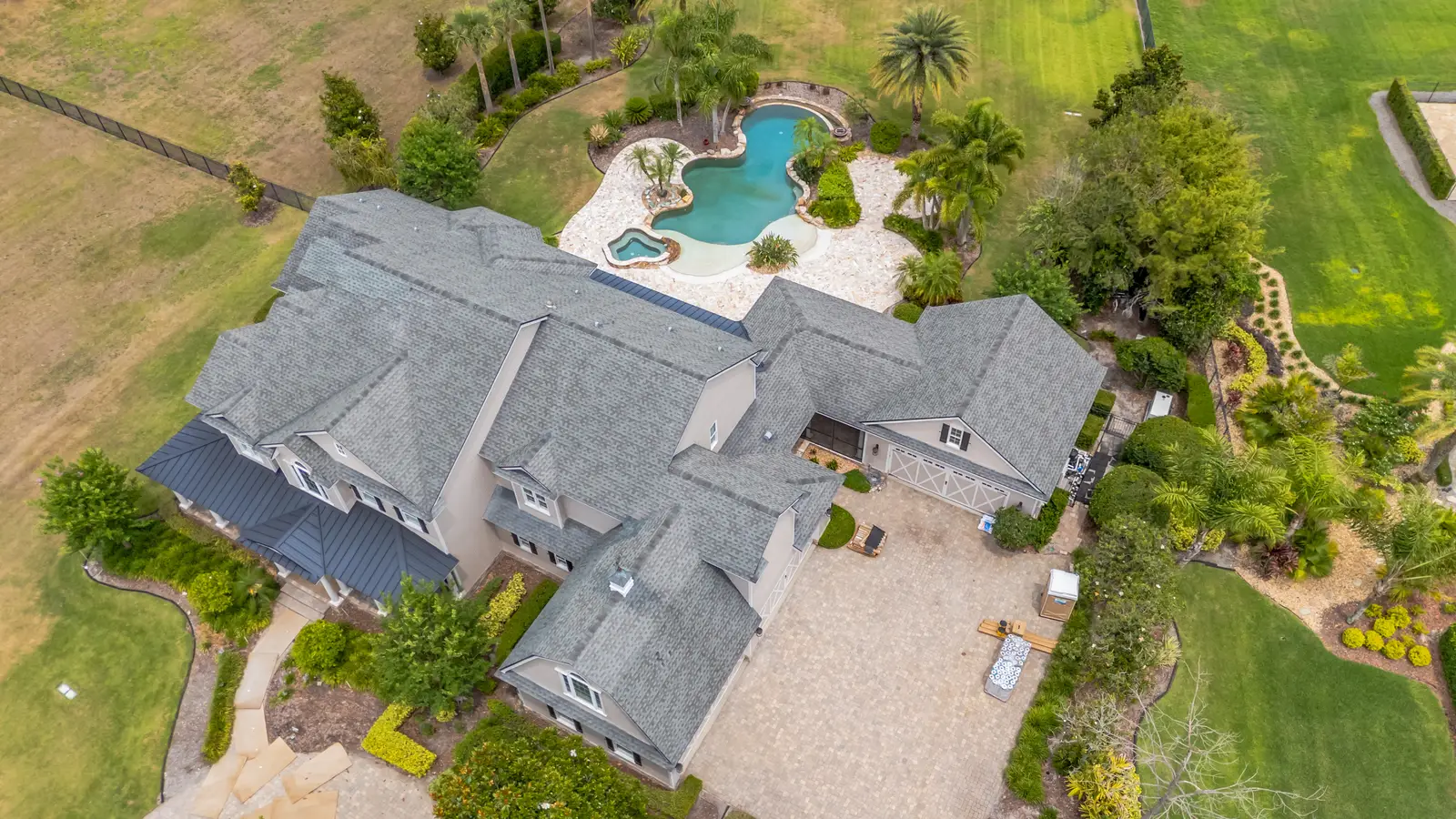
Roof Inspection · Citrus County
A free roof inspection gives you a written condition report with photographs, remaining service life, and any repairs ranked by urgency. Useful before buying a home, at insurance renewal, or when you simply want to know whether that stain matters.
What this involves
An inspection is a condition assessment, not a sales call. We start on the ground, looking at the roof planes, gutters, and fascia, then get on the roof where it is safe to walk. Up there we check field material for granule loss, curling, cracking, and broken seals; flashing at every wall, chimney, skylight, and pipe; valleys; ridge and hip caps; and the condition of the fasteners. We press on questionable areas to feel for soft decking. Then we go into the attic, because the underside tells you things the top never will: staining, rusted nails, daylight at the eaves, damp insulation.
You get a written report with photographs of what we found, sorted into what needs attention now, what to watch, and what is fine as it is. An estimate of remaining service life is part of it, based on material type, observed wear, and how the details are holding up. If the roof needs nothing, the report says so. Plenty of inspections end with a recommendation to clean the gutters, cut a branch back off the shingles, and look again in a year or two. If you need documentation for an insurance carrier or a home sale, tell us up front.
All work is performed by GenX Roofing LLC, a Florida Certified Roofing Contractor — license FL CCC1333347.Inverness Roofing is the local lead service for Citrus County.
Materials
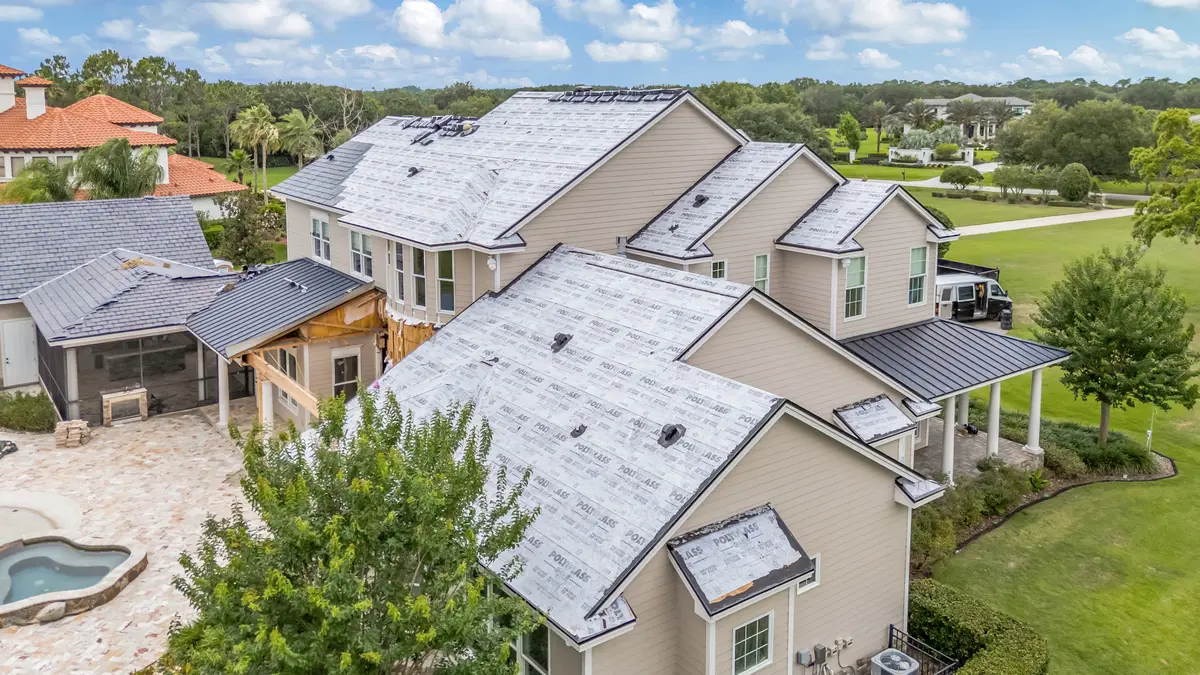
An inspection is about observation rather than installation, so the kit is simple: a moisture meter for suspect ceiling and attic areas, a probe for testing decking, a bright light for attic work, a camera for documentation, and fall protection. Where a roof is too steep to walk, or where tile would crack underfoot, we use drone photography to cover the field and get close to the details safely. Infrared imaging helps locate trapped moisture under low-slope membranes. Everything we find goes into a photo record tied to its location on the roof, so you can see exactly what we saw without climbing a ladder yourself.
How the job runs
Ground-level survey of the roof planes, gutters, fascia, and visible penetrations.
On-roof walk, or drone coverage where walking would damage the surface.
Detail check at every flashing, valley, vent, and ridge line.
Attic inspection for staining, rusted fasteners, damp insulation, and daylight gaps.
Written photo report with priorities and an estimate of remaining service life.
What drives the price
Inspection pricing depends on scope. A straightforward condition walk on an accessible single-story roof is the simplest version. Cost rises with roof size, the number of separate structures, steep or fragile surfaces that call for drone work or extra fall protection, and the depth of documentation you need. A report formatted for an insurance carrier or a real estate closing takes longer to produce than a verbal summary with photographs. Moisture scanning or infrared imaging adds time. If the inspection leads into repair work, the findings feed straight into the scope, so nothing has to be measured twice.
Why Florida is different
Two Florida realities make an inspection worth more here. First, insurers in this state pay close attention to roof age and condition, and a documented inspection is often what stands between a renewal and a non-renewal on a roof past the middle of its service life. Second, the climate hides damage. Wind-driven rain enters at details that look sound from the ground, and hot, humid attics let a slow leak feed mold for months before a stain reaches your ceiling. Checking after storm season, and again before the next one starts, catches small failures while they are still small.
By community
A wide mix — pre-war homes near the historic downtown, 1970s ranches on the ridge, and lakefront properties where wind exposure is higher than the county average.
ViewCoastal exposure is the defining factor here. Salt air shortens fastener and flashing life, and waterfront roofs take wind loads that inland Citrus County roofs never see.
ViewOlder waterfront cottages and stilt homes alongside newer inland subdivisions. Low slopes and salt corrosion drive most of the repair work.
ViewDense single-story homes of similar age, which means roofs across whole streets reach end of life within a few years of each other. A high proportion of manufactured homes.
View1970s–80s single-family stock plus a significant number of manufactured homes, many now on their second or third roof.
ViewScattered rural acreage and newer subdivisions, with a mix of shingle and metal roofs on larger lots.
ViewHistoric homes and older cottages under heavy tree cover — which means debris loading, shaded moss growth and impact damage are the common causes of failure.
View1980s–90s homes on generous lots with mature tree cover. HOA architectural rules often dictate replacement materials and color.
ViewLakefront and near-lake homes with above-average wind exposure, alongside older inland ranches.
ViewStraight answers
It depends on the size of the failure and what is underneath, which is why we inspect first and price in writing. You will never get a number over the phone that changes once we are on the roof.
Usually within a few days for the inspection, and we will give you a written scope and a date before anything begins.
GenX Roofing LLC, a Florida Certified Roofing Contractor, license CCC1333347.