Roof Replacement in Inverness
A wide mix — pre-war homes near the historic downtown, 1970s ranches on the ridge, and lakefront properties where wind exposure is higher than the county average.
View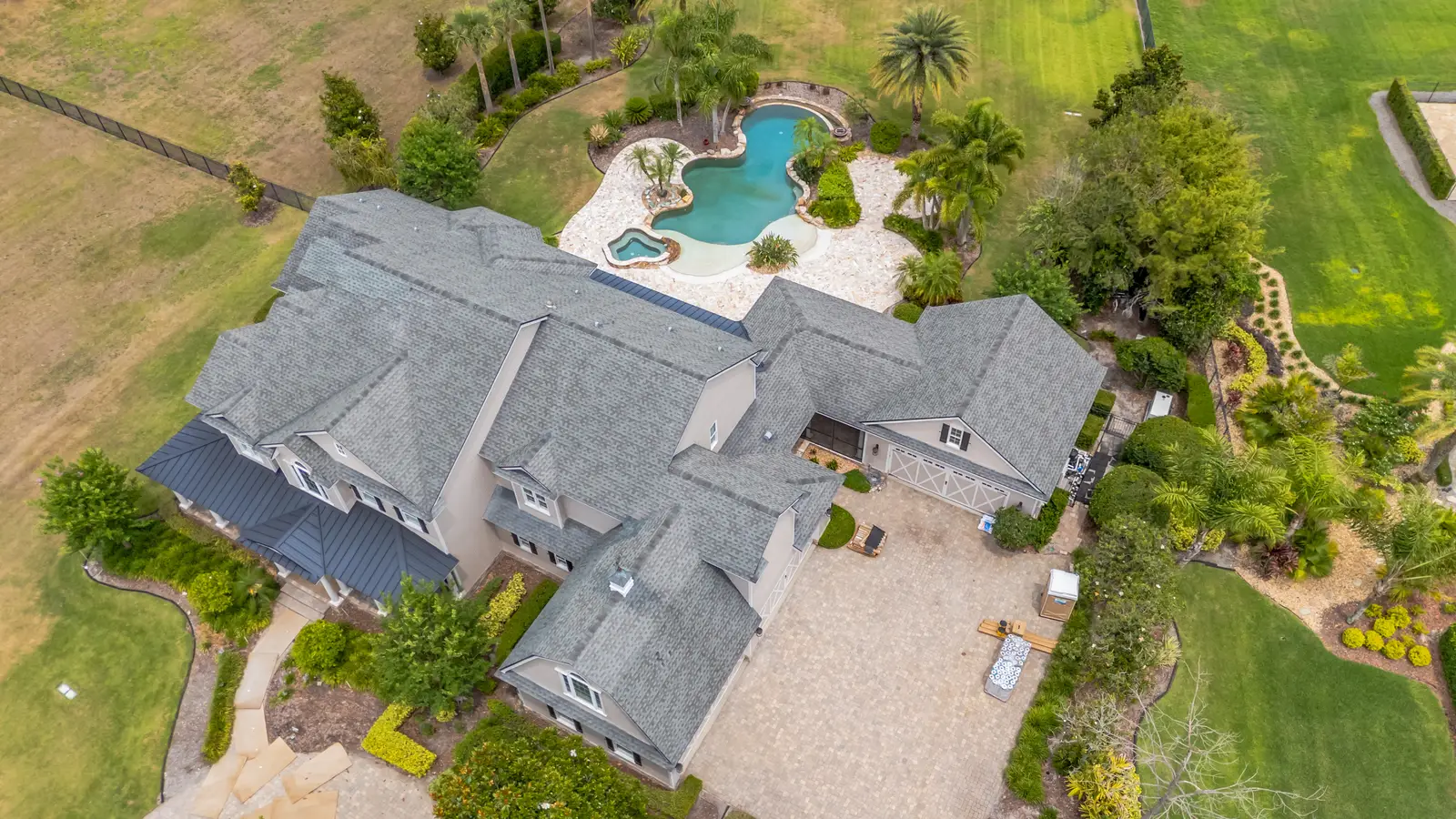
Roof Replacement · Citrus County
A full replacement in Citrus County typically takes one to three days on site. You get a written scope, a materials choice — architectural shingle, metal or tile — and a firm price before anything is torn off. Financing and insurance-claim support are available.
What this involves
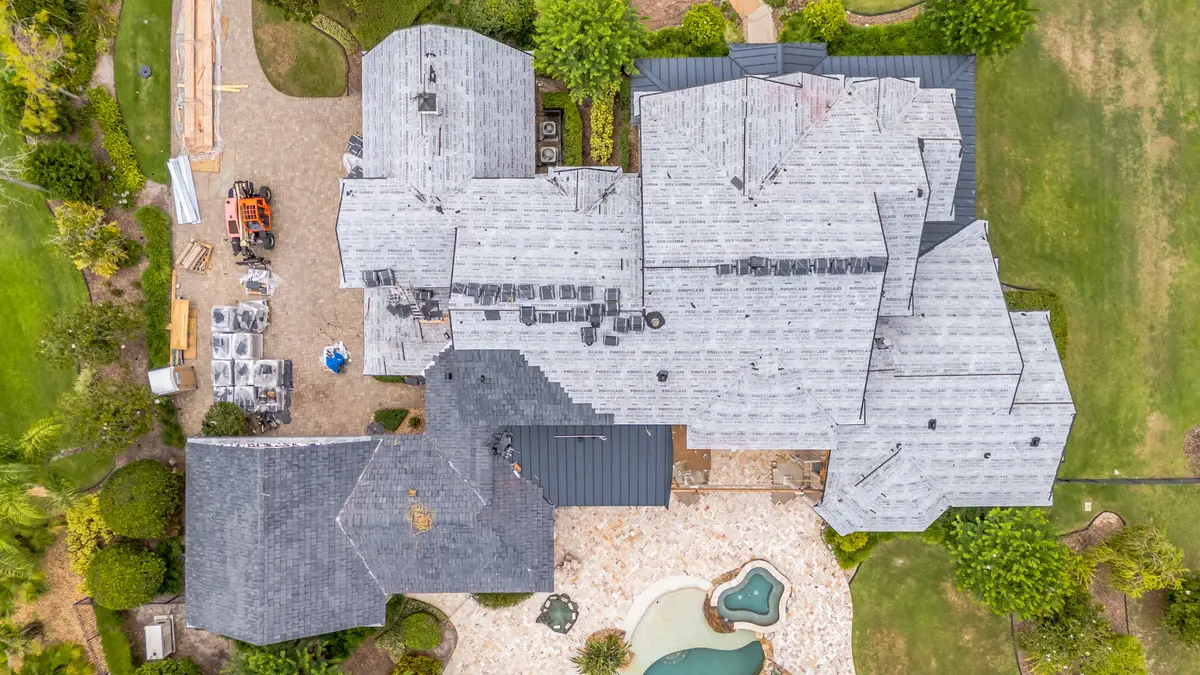
A replacement is a tear-off down to the decking, not a new layer laid over the old one. Once the old material and underlayment are off, we can see the sheathing for the first time, and that is when the real condition of your roof becomes known. We check every panel for delamination, water staining, and soft spots, and we look at the nailing at the edges and through the field. Bad sheathing comes out. Then the roof is rebuilt in order from the deck up, each layer doing a specific job and lapped so water can only ever travel downhill.
The build sequence matters as much as the material. Drip edge at the eaves, then underlayment lapped over it, then drip edge at the rakes over the underlayment. Valleys and penetrations get membrane before the field goes on. Starter strip along every edge. Field shingles nailed in the manufacturer's pattern, in the nail zone, not overdriven. Vents and pipe boots set as we come to them, with flashing woven in rather than sealed on afterward. Ridge vent cut and capped last. Built in that order, the roof sheds water without depending on sealant. Built out of order, it leaks at the details even with new material.
All work is performed by GenX Roofing LLC, a Florida Certified Roofing Contractor — license FL CCC1333347.Inverness Roofing is the local lead service for Citrus County.
Materials
Architectural asphalt shingles are the default for good reason: moderate cost, a wide color range, and solid wind performance when nailed correctly. Metal, either standing seam or exposed-fastener panels, costs more up front, sheds rain and debris well, reflects heat, and lasts substantially longer, with standing seam avoiding the exposed screws that eventually need attention on panel systems. Concrete or clay tile suits homes framed for it and shrugs off sun almost indefinitely, but it is heavy, and the underlayment beneath the tile, not the tile itself, is what keeps water out. Underlayment choice matters in all three cases; synthetic and self-adhering sheets outperform old organic felt.
How the job runs
Measure the roof, go through material options with you, and pull the permit.
Protect landscaping and pool cages, stage the dumpster and materials, then tear off.
Inspect the deck, replace bad sheathing, and re-nail the decking as required.
Install drip edge, underlayment, valley membrane, and flashing in the correct order.
Set field material, vents, and ridge, then clean up and call for inspection.
What drives the price
Replacement price comes down to size, complexity, and material. Roof area sets the baseline, but a cut-up roof with many valleys, dormers, and penetrations takes far more labor per square than a simple gable. Pitch affects both speed and safety equipment. Tearing off multiple existing layers means more disposal. Decking replacement and re-nailing to current fastening requirements are found conditions that cannot be fully known until the roof is open. Material choice moves the number most, since asphalt, metal, and tile sit at different levels. Permit fees, dumpster, and access to the work area all factor in.
Why Florida is different
Florida replacements carry requirements most states do not have. Deck re-nailing, a secondary water barrier, and specified fastening patterns for high wind all get inspected, and the roof has to pass before the job closes. That work is not optional, and it is part of why a Florida reroof costs what it does. The payoff is real: a properly documented, code-compliant roof is what insurers look at when they decide whether to write or renew a policy here, and an aging roof is a common reason for non-renewal. Sun and storm load also mean material choice affects service life more than in milder climates.
By community
A wide mix — pre-war homes near the historic downtown, 1970s ranches on the ridge, and lakefront properties where wind exposure is higher than the county average.
ViewCoastal exposure is the defining factor here. Salt air shortens fastener and flashing life, and waterfront roofs take wind loads that inland Citrus County roofs never see.
ViewOlder waterfront cottages and stilt homes alongside newer inland subdivisions. Low slopes and salt corrosion drive most of the repair work.
ViewDense single-story homes of similar age, which means roofs across whole streets reach end of life within a few years of each other. A high proportion of manufactured homes.
View1970s–80s single-family stock plus a significant number of manufactured homes, many now on their second or third roof.
ViewScattered rural acreage and newer subdivisions, with a mix of shingle and metal roofs on larger lots.
ViewHistoric homes and older cottages under heavy tree cover — which means debris loading, shaded moss growth and impact damage are the common causes of failure.
View1980s–90s homes on generous lots with mature tree cover. HOA architectural rules often dictate replacement materials and color.
ViewLakefront and near-lake homes with above-average wind exposure, alongside older inland ranches.
ViewStraight answers
It depends on the size of the failure and what is underneath, which is why we inspect first and price in writing. You will never get a number over the phone that changes once we are on the roof.
Usually within a few days for the inspection, and we will give you a written scope and a date before anything begins.
GenX Roofing LLC, a Florida Certified Roofing Contractor, license CCC1333347.